
The Stock Market’s Wisdom and Its Limits
The Wisdom of CrowdsThis thread follows financial markets from dispersed judgment through short-selling constraints to bubbles, imitation, and the need for independent investors.
increasing Bearing strength in each event
 decreasing
Bearing strength in each eventdecreasingPrices as Aggregated Judgments
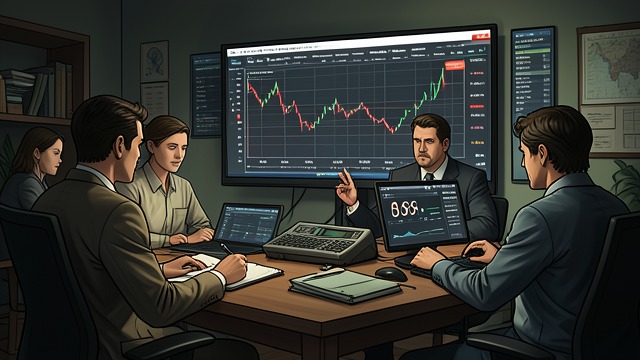
A Market Makes a Forecast
Many Views in One Price
A stock price reflects the judgments of buyers and sellers about a company’s future cash flow. No participant needs to know the entire future for the combined market to offer a useful estimate.
The market’s strength depends on differences in information and opinion, with prices offering a way to aggregate those judgments.
A Difficult Prediction
Forecasting a company’s value decades ahead is much harder than predicting a football game or an election. Outcomes are distant, uncertain, and difficult to use as an immediate test of accuracy.
The chapter therefore treats market efficiency as relative: markets can be better than individual investors without being perfectly right.
The Short Seller’s Role

Betting Against a Price
A Distrusted Position
Short sellers borrow and sell stock in the hope that its price will fall. Governments and investors have often treated them as enemies, particularly after financial crises.
Yet short selling allows investors who believe a company is overvalued to express that judgment. Without them, market opinions can be disproportionately optimistic.
Missing Dissent
The chapter argues that a shortage of short sellers does not make the market safer. It makes it harder for negative information and skeptical views to enter prices, potentially allowing errors to grow.
The conflict is between the emotional appeal of rising prices and the market’s need for contrary judgments to keep prices realistic.
The Beauty Contest

Predicting the Crowd’s Prediction
Beyond Company Value
John Maynard Keynes compared investing to a beauty contest in which a participant tries to choose the faces others will consider attractive. Investors may buy not because they believe a company is worth its price, but because they expect another buyer to pay more.
Judgment then becomes recursive: people consider what others think, and what others think others think.
A Mixed Market
Some investors remain focused on underlying value, while others try to anticipate popular opinion. Markets are usually a shifting combination of independent analysis and dependence on the crowd.
Bubbles emerge when dependence overwhelms independent judgment and the desire to resell replaces attention to a company’s prospects.
Bowling Stocks Rise

A Pastime Becomes an Investment Story
The Pinsetter’s Promise
Gottfried Schmidt built an automatic pinsetter, and Morehead Patterson helped bring it to market through the American Machine and Foundry. The invention helped modernize bowling alleys and expand the sport.
Investors extrapolated the boom in popularity into a belief that bowling would continue to grow rapidly. Bowling-related companies attracted capital and new alleys appeared across the country.
The Bubble Turns
By 1963, bowling stocks had fallen sharply from their highs. Investors had overbuilt capacity based on expectations that did not endure.
The case shows how a real innovation and genuine cultural trend can become the starting point for an unjustified investment boom.
The Greater Fool and the Exit
Selling to Someone Else
A Known Valuation, Irrational Trading
In a Caltech experiment, shares paid fixed dividends and had a known maximum value, yet students traded them at inflated prices. Participants said they expected to sell to a greater fool.
Real bubbles are less explicit: some investors may begin to believe that prices reflect genuine value, even as the desire to resell helps drive them higher.
Independence as Resistance
CNBC coverage and market commentary could amplify attention to what other investors were doing. Experiments suggested that more news and commentary might prompt overreaction rather than better decisions.
The market remains more robust when some investors refuse to follow prices simply because others are following them. Independent judgment is not a luxury; it is a condition of collective accuracy.
The chapter 11 opening argument
From the seventeenth century through the 1990s
Keynes’s account of investment behavior
1957 to 1963
The late 1990s bubble and the chapter’s closing analysis
